
The planet is a seed
An Earth-sized, fully mineable world that fits on one drive, because none of it is stored.
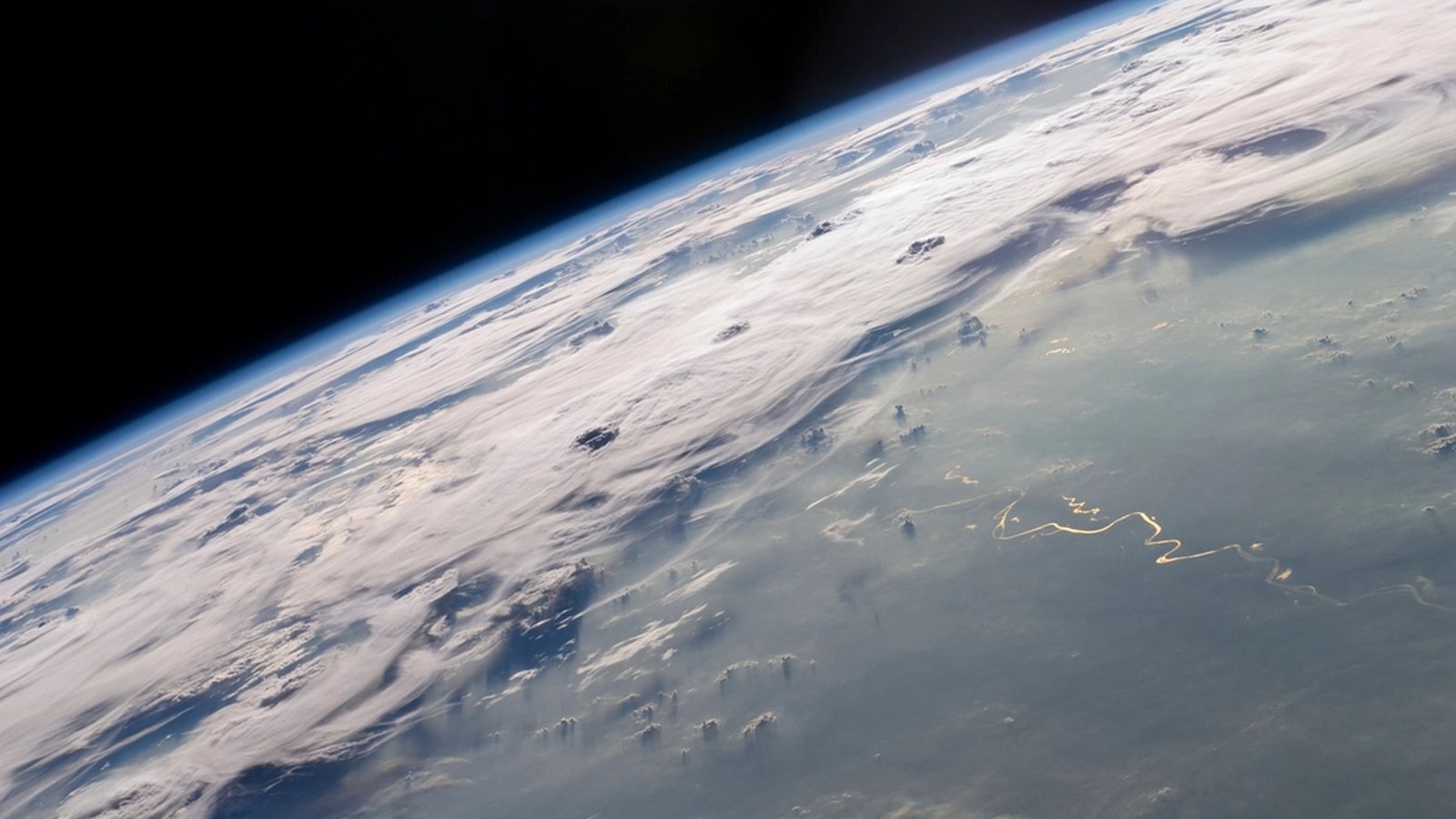
Start with the number that kills the obvious approach.
An Earth-scale sphere with a playable shell about eight kilometres thick, at quarter-metre voxels, would take roughly 268 exabytes to store densely. That is somewhere near four billion dollars in bare drives. The approach is not expensive, it is impossible.
So store the recipe instead of the result.
The planet is a seed plus a generator graph, which together come in under a megabyte. A coarse height and albedo map of about a hundred megabytes ships with the client. Everything else is derived on demand.
The only thing actually written down is what players change. An Earth-sized fully mineable planet with ten thousand players fits on a single drive, at roughly 600 GB of edits a year.
Resolution barely moves that number.
This is the part that surprises people. Going to finer voxels does not multiply storage, because the count of edited chunks is set by human behaviour rather than by grid size. Players dig where players are. A finer grid makes each edit more detailed, not more numerous.
A flat lattice on a round planet.
The world is carved from an unwarped uniform cubic lattice. Cube-sphere projection was rejected deliberately: warped grids give anisotropic voxels, and that breaks mining volume, ore density and collision consistency in ways players feel without being able to name.
It works because the curvature is tiny at working scale. Over one cell of about sixteen kilometres the planet drops around 1.3 metres, so the generator can work in near-flat local space and let the sphere emerge from the lattice for free.
Servers follow players, not geography.
Compute is organised as bubbles that move with players. There are no fixed regions and no handoffs at boundaries, which removes an entire category of bug that region-based servers spend years on.
The reframe that produced it is worth stating plainly, because it applies well beyond this project: cells are an addressing scheme, not a server topology.
Return of the Runes
Describe what you want to make and the runes answer. A finite named set on an open-ended scorer.
Open the project pageRelated
Owning the generator
Why Dust MC was written from scratch instead of forking a working Rust server.
A compromised server cannot invent orders
How the robot fleet splits deciding what to do from deciding whether it is allowed.
Return of the Runes
Describe what you want to make and the runes answer. A finite named set on an open-ended scorer.